How ML Models Learn Your Sleep
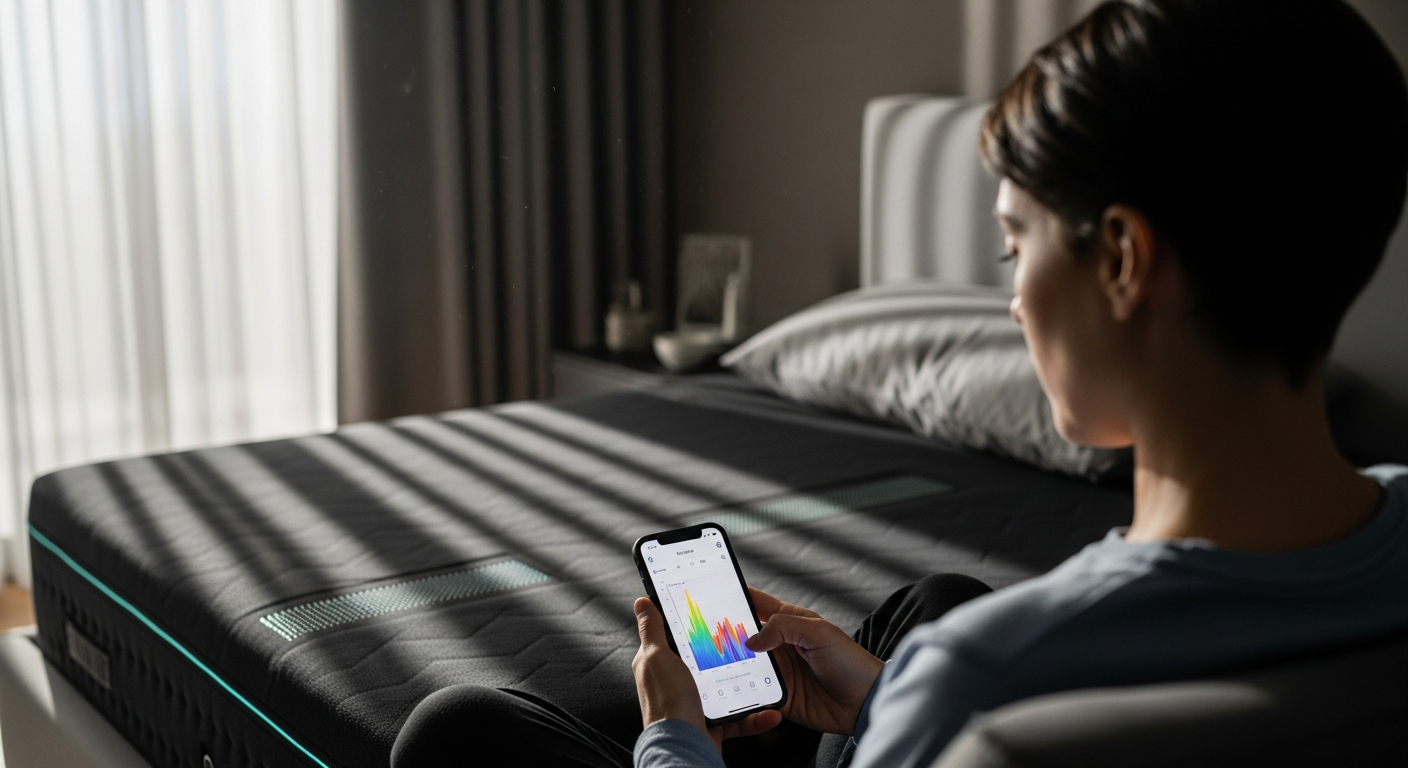
Modern smart beds collect hundreds of biometric data points every night, including heart rate, respiratory rate, movement frequency, and skin temperature. Machine learning algorithms process these signals to build a personalized sleep profile that improves over the first two to four weeks of use. Unlike static rule-based systems, ML models can detect subtle correlations, for example that a particular user sleeps more deeply when the mattress surface drops by two degrees thirty minutes after they fall asleep.
Most manufacturers use a combination of supervised and unsupervised learning. Supervised models are pre-trained on anonymized datasets from tens of thousands of sleepers, giving the system a strong baseline from day one. Unsupervised clustering then adapts that baseline to the individual, recognizing patterns like weekend versus weekday sleep schedules or seasonal temperature preferences without the user having to configure anything manually.
The result is a bed that effectively gets smarter over time. Early adopters of the Eight Sleep Pod 4 Ultra reported that their sleep scores improved by an average of twelve percent after the first month, largely because the system learned when to cool the bed during REM cycles and when to warm it during lighter sleep stages.
Automatic Temperature Adjustment
Temperature is the single most impactful variable a smart bed can control, and it is also where machine learning shines brightest. Traditional thermostat-style beds let you set a fixed temperature for the night, but the temperature that suits a sleeper is not constant across sleep stages. During deep sleep, your core body temperature drops naturally, and a cooler mattress surface supports that process. During REM sleep, the body loses some of its thermoregulatory ability, making external temperature control even more critical.
AI-driven systems solve this by creating dynamic temperature curves. The ML model predicts when you are likely to transition between sleep stages based on your historical patterns, then pre-adjusts the bed temperature a few minutes ahead of the transition. This proactive approach prevents the brief awakenings that often occur when your body temperature and mattress temperature are mismatched. Eight Sleep calls this Autopilot, while Sleep Number uses a similar system called SleepIQ AI.
Predictive Sleep Coaching
Beyond real-time adjustments, ML models are increasingly being used to deliver next-day coaching. By correlating sleep quality data with external factors such as ambient room temperature, exercise timing, caffeine intake (logged via companion apps), and even local weather data, these systems can offer personalized suggestions. A typical recommendation might be to start the bed cooling cycle fifteen minutes earlier on days when the user exercises in the evening.
Some platforms have begun experimenting with reinforcement learning, where the model treats each night as a trial and optimizes a reward function tied to measurable sleep quality metrics like time-in-deep-sleep and sleep onset latency. Early results from clinical pilots suggest that reinforcement learning can reduce the optimization period from four weeks to roughly ten days.
Privacy and Data Concerns
The flip side of all this personalization is data collection. Smart beds that use cloud-based ML models transmit biometric data to remote servers, raising legitimate privacy questions. Leading manufacturers have responded by offering on-device processing for basic adjustments, reserving cloud processing for more complex model training. Some brands now provide a full data export option and the ability to delete your sleep history entirely.
If privacy is a top concern, look for beds that support local-first processing and give you granular control over what data leaves your home network. The Matter protocol, which several smart bed makers are adopting, includes built-in data-locality provisions that could make cloud dependency optional in the near future.
About this content
SmartBed is a portfolio demonstration of how a category content and commerce site is put together: the information architecture, the category hubs, the comparison structures and the buying surfaces. Every article, rating, specification, price and figure on it is synthetic sample copy written to exercise that structure. No product was tested, no figure was verified, and nothing here is buying, medical or investment advice.