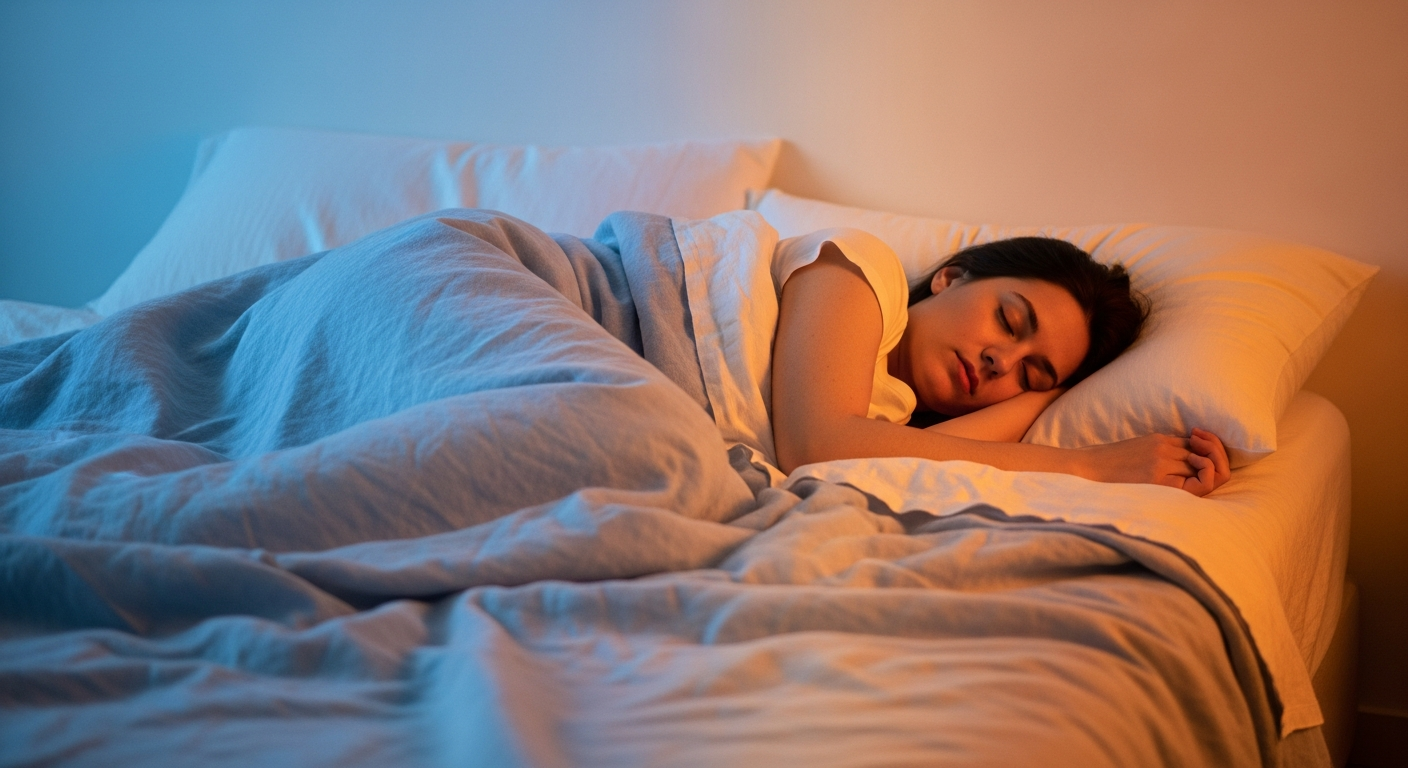
Why Temperature Matters for Sleep
Your body's core temperature follows a circadian rhythm, dropping 1 to 2 degrees as you fall asleep and reaching its lowest point in the early morning hours. This temperature decline is not just a byproduct of sleep; it is a physiological trigger that helps initiate and maintain deep sleep stages. When your sleep environment is too warm, your body struggles to achieve this temperature drop, resulting in less deep sleep, more awakenings, and lower overall sleep quality.
Research from institutions including the National Institutes of Health and the University of Texas has established that the optimal ambient temperature for sleep falls between 60 and 67 degrees Fahrenheit for most adults. However, most bedrooms are warmer than this, especially during summer months. Smart bed temperature control systems address this gap by actively cooling or warming the sleep surface to maintain ideal conditions throughout the night.
Water-Based Systems
Water-based temperature control, used by Eight Sleep and ChiliSleep, works by circulating temperature-controlled water through a network of micro-tubes embedded in a mattress pad or cover. A bedside hub unit contains a thermoelectric cooling and heating element (similar to a mini refrigerator) that adjusts the water temperature before pumping it through the pad. The water absorbs heat from or transfers heat to the sleeper through the thin surface layer.
Water-based systems excel at maintaining consistent temperature over long periods because water has a high thermal mass, meaning it resists rapid temperature changes once set. Eight Sleep's system can range from 55 to 110 degrees Fahrenheit, while ChiliSleep's OOLER spans 55 to 115 degrees. The downside is that these systems require periodic water maintenance, can occasionally produce pump noise, and take longer to reach target temperature than air-based alternatives.
Air-Based Systems
BedJet pioneered the air-based approach to bed temperature control. Instead of circulating liquid, the BedJet unit draws in room air, heats or cools it using a thermoelectric element and fan, then blows the conditioned air directly into the bed through a flat nozzle at the foot of the bed or through a specially designed Cloud Sheet that distributes air evenly. The result is the fastest temperature change of any system: BedJet can noticeably cool or warm a bed in under three minutes.
Air-based systems offer several practical advantages: no water to maintain, no risk of leaks, and significantly lighter weight than water-based alternatives. They also tend to be more affordable. The trade-off is that air does not maintain temperature as consistently as water, and the fan produces audible airflow noise at higher speeds.
Integrated Systems
Some smart beds, like the Sleep Number Climate360 and Tempur-Pedic ActiveBreeze, integrate temperature control directly into the mattress construction. The Climate360 uses warming and cooling elements within the mattress layers, including a foot-warming zone. The ActiveBreeze uses a proprietary cooling layer built into the Tempur material that provides continuous heat dissipation without external equipment. These integrated approaches offer the cleanest aesthetics and quietest operation, but are typically the most expensive options and cannot be transferred to a different mattress.
Comparing the Approaches
Each temperature control approach has distinct strengths. Water-based systems provide the most consistent temperature regulation and the widest temperature ranges. Air-based systems offer the fastest response time and lowest maintenance requirements. Integrated systems deliver the quietest operation and most seamless aesthetics. For most users, the choice comes down to budget and whether you want to keep your existing mattress. Add-on systems (BedJet, ChiliSleep, Eight Sleep) work with any bed, while integrated systems (Climate360, ActiveBreeze) require buying the complete mattress package.
Finding Your Optimal Temperature
The ideal bed temperature varies from person to person based on metabolism, body composition, room temperature, bedding, and personal preference. Start with a surface temperature around 68 degrees Fahrenheit and adjust in small increments over several nights. Most smart bed apps allow you to program different temperatures for falling asleep, middle of the night, and pre-wake periods. Many users find that a slightly cool surface for falling asleep (65-68 degrees), a neutral temperature during deep sleep, and gentle warming before waking (72-75 degrees) produces the best results. Give any new setting at least three nights before evaluating, as your body needs time to adapt.
About this content
SmartBed is a portfolio demonstration of how a category content and commerce site is put together: the information architecture, the category hubs, the comparison structures and the buying surfaces. Every article, rating, specification, price and figure on it is synthetic sample copy written to exercise that structure. No product was tested, no figure was verified, and nothing here is buying, medical or investment advice.