How Bed-Based Sleep Tracking Works
Unlike wearable trackers that measure signals from your wrist, smart bed sleep tracking uses a technology called ballistocardiography (BCG). Sensitive pressure sensors embedded in the mattress surface detect the tiny mechanical vibrations produced by your heartbeat, breathing, and body movements. Every time your heart beats, it generates a subtle recoil force that travels through your body and into the mattress. These micro-movements are imperceptible to you but are easily captured by piezoelectric or capacitive sensors in the bed.
The sensor data is processed by algorithms that extract meaningful health metrics. Heart rate is derived from the cardiac ballistic signal, respiratory rate from the rhythmic chest movement pattern, and sleep stages from the combination of heart rate variability, breathing patterns, and body movement frequency. More advanced systems like Eight Sleep also use temperature data and movement patterns to enhance sleep stage classification accuracy.
Metrics Tracked
Modern smart beds track a comprehensive set of sleep metrics. Heart rate monitoring reveals your resting heart rate trends and how they change across sleep stages. Heart rate variability (HRV) is a key indicator of recovery and autonomic nervous system health. Respiratory rate tracking can flag potential breathing irregularities. Sleep stage classification breaks your night into wake, light sleep, deep sleep, and REM periods. Movement tracking quantifies toss-and-turn frequency. Sleep and wake times are logged automatically. Many systems also calculate composite scores like Eight Sleep's sleep fitness score or Sleep Number's SleepIQ score that summarize your overall nightly performance.
Accuracy Compared to Medical Devices
The gold standard for sleep measurement is polysomnography (PSG), a clinical test that monitors brain waves, eye movements, muscle activity, heart rhythm, and breathing. No consumer device matches PSG accuracy. Heart rate and respiratory rate from bed sensors are the metrics that track a medical device most closely, and sleep stage classification is the least accurate. A real article would put an accuracy figure on each of those and name its source. This demo cites no study and invents no number, so none is given.
For practical purposes, the trend data from smart beds is more valuable than absolute accuracy for any single night. If your deep sleep percentage trends downward over two weeks, that pattern is meaningful and actionable regardless of whether the exact percentages match what a sleep lab would measure.
Using Your Sleep Data
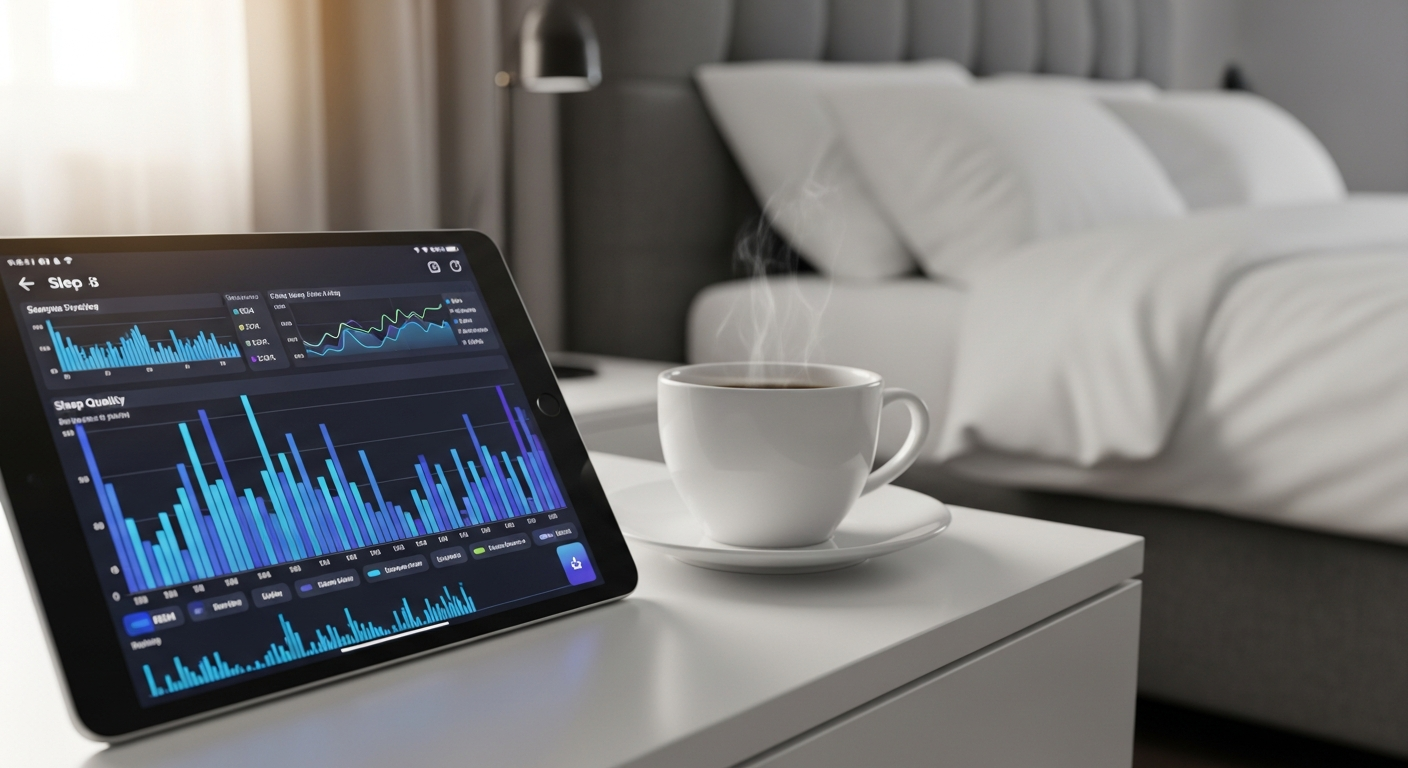
The most actionable insights from sleep tracking come from correlating your sleep metrics with daytime behaviors. Track how exercise timing, caffeine consumption, alcohol intake, screen time before bed, and room temperature affect your sleep scores. Look for patterns over weeks rather than reacting to individual nights. If you notice that your HRV drops and deep sleep decreases on nights when you exercise after 8 PM, that data-driven insight is far more valuable than any generic sleep advice. Most smart bed apps provide weekly and monthly trend views that make these patterns visible.
Privacy Considerations
Sleep data is inherently sensitive health information, and it is worth understanding how each brand handles it. Most smart bed companies store your data in the cloud to enable app access and algorithmic processing. Eight Sleep and Sleep Number both have detailed privacy policies that describe data collection and usage practices. If privacy is a priority, look for products that offer local data processing options, allow data deletion on request, and clearly state they do not sell personal health data to third parties. The ChiliSleep OOLER and BedJet 3 collect the least data since they do not include sleep tracking, making them the most privacy-friendly options.
About this content
SmartBed is a portfolio demonstration of how a category content and commerce site is put together: the information architecture, the category hubs, the comparison structures and the buying surfaces. Every article, rating, specification, price and figure on it is synthetic sample copy written to exercise that structure. No product was tested, no figure was verified, and nothing here is buying, medical or investment advice.